

Vietnam has begun creating an international financial center intended to connect the needs of the country’s fast-growing economy with global capital markets. The project combines two sites—Ho Chi Minh City and Da Nang—with different specializations but common operating rules. For foreign partners, including Russian companies, the current stage is of particular interest: the core institutions have already been established, while financial products, business ties, and practical mechanisms for attracting capital are still taking shape.
The economic preconditions for such an initiative have been taking shape over the past several years. Vietnam has strengthened its position in international production chains, expanded exports, and become one of the more prominent destinations for foreign direct investment in Southeast Asia. According to the General Statistics Office of Vietnam, in January-September 2026 disbursed foreign direct investment reached $21.07 billion, up 12.1% from the same period a year earlier. Total registered foreign capital amounted to $50.36 billion, although this figure includes not only new projects but also additional investment in existing enterprises and equity acquisitions.
Further industrialization requires financing sources designed for far longer terms than ordinary working-capital loans. The construction of energy facilities, ports, transport corridors, industrial plants, and digital infrastructure requires large upfront investment, with payback periods that can stretch over decades. According to a World Bank estimate, Vietnam needs about $25 billion a year for sustainable development alone, and the state can provide no more than two-thirds of that amount. The remaining funds will have to be raised from private investors, banks, and through capital markets.
Meanwhile, the country’s existing financial system remains heavily dependent on bank lending. In 2024, its volume reached 136% of GDP, while the corporate bond market remained far less developed. That structure gives businesses access to borrowed funds, but it also concentrates long-term risk on bank balance sheets. The development of investment funds, the bond market, insurance, and project finance should expand capital-raising options without a comparable increase in the credit burden on the banking sector.
By creating the Vietnam International Financial Center (VIFC), Hanoi hopes to accelerate this process by offering foreign investors special conditions for working with Vietnamese assets. Additional opportunities are opening up as the stock market’s international status rises. On September 21, 2026, the phased inclusion of Vietnamese securities in FTSE Russell indexes for the Secondary Emerging Market category began. According to the FTSE Russell plan, the process is designed in four stages and is to be completed in September 2027, making it easier for foreign institutional investors to access the existing equities market, while VIFC is intended to create conditions for a broader range of financial services to develop.
One Center, Two Specializations
The distinctive feature of the Vietnamese initiative lies in the territorial and functional structure of the future financial center. Despite the common description of it as two international financial centers, under Government Decree No. 323/2025/ND-CP it is a single legal entity with two sites operating under common rules. The National Executive Council is responsible for strategy and the core regulatory provisions, while specialized bodies in Ho Chi Minh City and Da Nang ensure the center functions on the ground. Participants will be subject to uniform registration and licensing standards, although the specialization of financial products is supposed to reflect each city’s economic strengths.
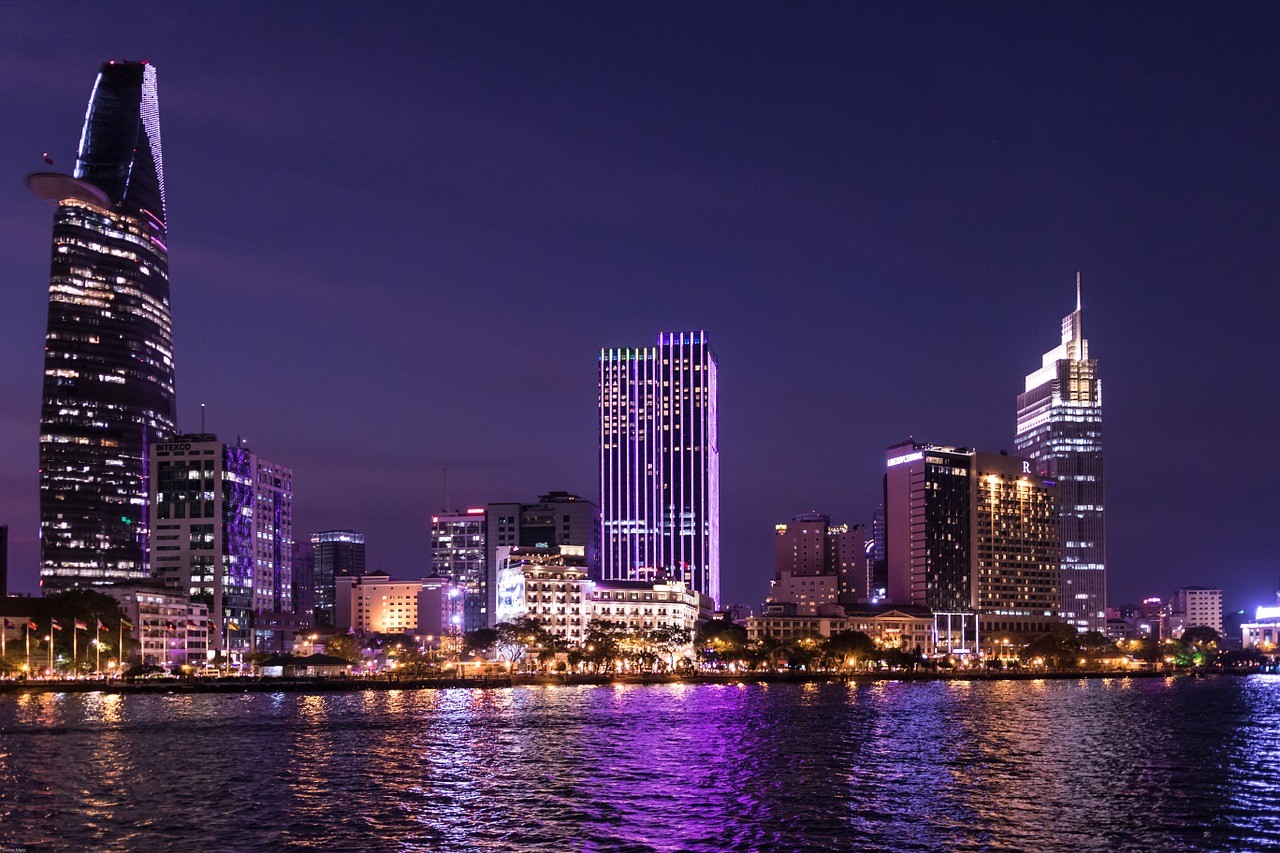
Ho Chi Minh City is assigned the role of the main capital-markets platform. That is especially logical because the country’s largest economic center already has a substantial concentration of banks, corporations, investment intermediaries, and enterprises working with foreign capital. Development of the Thu Thiem financial district is supposed to complement this base with infrastructure for international securities offerings, investment funds, asset management, mergers and acquisitions, and trade and infrastructure finance. Of particular importance is the ability to raise funds not only through bank loans but also through debt instruments backed by the revenues of specific companies or projects.
Da Nang is getting a different specialization. The government plan calls for the development there of financial technology, digital payments, asset tokenization, specialized trading venues, and experimental regulatory regimes. The city also intends to use its advantages in digital infrastructure and technology services, including linking financial products to the development of a free trade zone. This approach makes it possible to test new methods of financing and settlement without requiring Da Nang to immediately build a universal financial market comparable in scale to Ho Chi Minh City.
The division of functions looks rational given the differences between the cities, but its effectiveness will depend on how well the two administrations act in concert. International financial operations require a unified system for participant registration, data exchange, supervision, settlement, and risk control. If the two sites begin building competing infrastructures with a limited number of professional participants, some public and private investment will be spent duplicating services. The unity of rules provided for in the legislation therefore has its own economic significance, especially for companies planning to work simultaneously with traditional financial instruments and new technologies.
A major advantage of VIFC is its special legal and tax regime. National Assembly Resolution No. 222/2025/QH15 and subsequent government decrees provide a 10% corporate income tax rate for 30 years for new investment projects in priority sectors, an exemption from tax for up to four years, and a subsequent 50% reduction in assessed tax for up to nine years. For new projects outside priority areas, a 15% rate applies for 15 years, with shorter tax-holiday periods.
Particular attention is also being paid to attracting specialists. Experts, researchers, and executives who meet the established criteria are exempt from personal income tax on work performed at VIFC through the end of 2030, while certain categories of foreign investors and specialists are eligible for long-term visas and residence documents valid for up to ten years. The use of English is permitted in paperwork and professional operations, which is meant to reduce costs for international financial organizations that need qualified lawyers, asset managers, settlement specialists, and risk managers for permanent operations.
A special foreign-exchange regime is a central element of the project. VIFC participants may use foreign currency for payments, transfers, and setting prices in transactions among themselves and with foreign counterparties. Decree No. 329/2025/ND-CP and related State Bank of Vietnam rules set out the procedures for opening foreign-currency and capital accounts, obtaining external financing, and transferring lawfully earned funds abroad. At the same time, transactions with Vietnamese residents that are not participants in the center remain governed by the country’s general foreign-exchange legislation. Hanoi is expanding the scope for cross-border financial operations while preserving control over capital flows between the special regime and the rest of the economy.
The legal framework for VIFC also provides for a specialized court, international arbitration, the possibility of applying foreign law in certain categories of transactions, and regulated experimental regimes for financial technology. The importance of these provisions, however, will be determined by licensing practice, dispute resolution, and the enforcement of decisions.
From Special Rules to a Real Market
By fall 2026, the creation of VIFC had moved well beyond the initial political decisions. The core regulatory framework has already been adopted and governing bodies established, and a unified participant-registration system was launched in August. In Ho Chi Minh City, a financial technology center has begun operating, while international banks and companies have started discussing concrete forms of presence and financing. At the same time, at an Executive Council meeting in August, the administrations of both sites were tasked with ensuring the emergence of financial products, actual transactions, and international capital flows.
In July, Singapore’s UOB announced the start of construction of its own headquarters on the VIFC-HCMC site, with stated investment of about $450 million and planned completion in 2030. The bank also intends to establish a separate presence in the financial center. In September, EQuest Capital and Standard Chartered signed an agreement to prepare for raising up to $325 million in international financing for education projects.
One of the more substantive areas is the market for infrastructure and municipal bonds. The urban development law that took effect on October 1 creates legal grounds for issuing such securities through VIFC-HCMC. On October 7, representatives of the center together with the International Finance Corporation discussed the terms for their placement, focusing on credit ratings, project selection, debt-repayment sources, disclosure, and currency risks. For an international investor, what matters is how revenues from the infrastructure asset or budget commitments will ensure servicing of the issued securities. Legislative permission to issue them opens that possibility, but the cost of raising capital will depend on the quality of the projects themselves and the terms of their financing.
A similar dependence exists in the commodity derivatives market as well. For Vietnam, which is deeply involved in global trade in food, manufactured goods, and raw materials, developing instruments for managing price risks has practical importance. Exporters and importers want to be able to determine the cost of future deliveries in advance, while banks and insurers need to assess the corresponding obligations. But sustainable derivatives trading requires recognized price benchmarks, participants prepared to provide continuous bid and ask liquidity, reliable settlement, and a system for securing obligations. Creating a trading venue without these conditions will not ensure demand for its products.
Da Nang expects to use financial technology to accelerate the development of its own specialization. The list of promising areas includes digital payments, tokenization of real assets, and financial services for businesses, as well as customer identification and data-management technologies. Regulatory sandboxes make it possible to test new products under special supervision, but experimental authorization does not replace a full license and does not guarantee that the product will later be admitted to the mass market. Additional requirements arise in investor protection and anti-money laundering, especially for digital-asset transactions and cross-border payments.
In the Financial Action Task Force (FATF) decision published on June 19, 2026, the country remained on the list of jurisdictions under increased monitoring. FATF pointed to the need for further improvement in financial supervision, virtual-asset regulation, ownership transparency, and combating financial crime. At the same time, that status does not mean a ban on lawful international operations: the applicable requirements take into account the nature of the specific transaction and its participants.
Vietnam is already taking steps to address some external regulatory concerns. On October 9, 2026, for example, the Council of the European Union removed the country from the main list of non-cooperative jurisdictions for tax purposes, moving it to the list of states that continue engaging with the EU to improve tax transparency.
The project’s prospects will likely be determined by Vietnam’s ability to develop financial services around existing demand. Singapore and Hong Kong have established international banking links and large pools of capital, as well as a developed professional environment with a long history of financial regulation. That scale cannot be replicated through tax incentives alone, so for Ho Chi Minh City and Da Nang a more realistic path is gradual specialization in financing Vietnamese industry, foreign trade, infrastructure, the energy transition, and technology companies, followed by an expansion of the client base into Southeast Asian markets.
Russian Participation: From Trade Contracts to New Financial Services
For Russia, the creation of VIFC coincides with efforts to expand economic ties with Vietnam. In the joint statement following To Lam’s state visit to Russia on September 7-9, 2026, the sides confirmed their interest in developing banking and financial coordination, supporting investors, and expanding industrial cooperation and technological collaboration. Hanoi expressed readiness to facilitate Russian investment in projects with high value added, technology transfer, and specialist training. The published agreements do not, however, provide any separate special status for Russian VIFC participants, so their possible presence will be determined by the center’s general rules and the terms of specific projects.
Existing trade already provides a certain base for financial interaction. According to Vietnam Customs data, bilateral trade in goods reached $4.77 billion in 2025, up 4%. Russian supplies include coal, fertilizers, and other industrial products; Vietnamese supplies include consumer goods, textiles, food, and electronics. Participants in that trade need stable settlement, performance guarantees, cargo insurance, and financing for the period between shipment of the goods and receipt of payment. These services fall directly within the priority activities provided for under VIFC legislation.
Of practical interest is the possibility of handling trade transactions through financial organizations operating under the center’s special regime. For example, financing the delivery of Russian fertilizers to a Vietnamese buyer may include a bank guarantee, a letter of credit, cargo insurance, and deferred payment followed by receivables financing. For the supplier, this reduces dependence on one-time payment; for the buyer, it makes it possible to align expenses with the production cycle. VIFC participation would be justified if a local financial intermediary can offer more convenient servicing terms, reliable settlement, and an acceptable cost of financing compared with existing mechanisms.
Currency cooperation is especially important, and Russia and Vietnam already have experience with settlements in national currencies, although expanding them depends on banks’ willingness to service such operations, the availability of currency liquidity, and the cost of conversion.
At the same time, expanding ruble-dong settlements requires solving issues that the establishment of a financial center does not by itself remove. Banks need sufficient two-way currency flows, a clear procedure for setting exchange rates, the ability to manage open currency positions, and reliable channels for transferring funds. If liquidity is insufficient, direct exchange may prove more expensive than conversion through a more widely used currency, while creating a separate financial instrument without sustainable turnover will increase participants’ costs. In the near term, the main practical interest therefore lies above all in servicing existing contracts, while more complex instruments for hedging ruble-dong risk will require a broader market.
Significant opportunities for financial cooperation are also linked to joint investment projects. In oil and gas, Russia and Vietnam have many years of experience through Vietsovpetro and Rusvietpetro, while the development of energy cooperation envisions new extraction, processing, and infrastructure projects. Of separate importance is the intergovernmental agreement on construction of the Ninh Thuan-1 nuclear power plant, signed on March 23, 2026.
Here, VIFC participation could have broader significance than servicing an ordinary foreign-trade transaction. The center’s financial institutions could potentially take part in arranging financing for individual stages of infrastructure projects, supporting investments, issuing debt instruments, and insuring risks where the relevant licenses and commercial agreements are in place. Particularly promising is support for equipment suppliers and local contractors that need working capital during the construction period. At the same time, turning such possibilities into reality will require specific customers, sources for repayment of obligations, and agreed terms for the participation of financial organizations.
Russian companies have experience developing digital banking services, payment solutions, software for risk management, detecting fraudulent transactions, and ensuring information security. Some of these capabilities may be in demand as VIFC’s financial infrastructure takes shape, especially in Da Nang, where experimental products and technology services are meant to develop. For the Vietnamese side, such cooperation is of interest provided the proposed solutions comply with local requirements for data protection, transaction transparency, and financial supervision.
Early technological participation differs from entering the capital market in that a developer can offer a needed service before significant trading volumes or assets under management appear. A customer-screening system is needed as soon as the first financial organizations are registered, risk-control tools when credit and investment products are launched, and information protection from the moment settlement infrastructure is created. A Russian provider can work under contract with a Vietnamese partner or consider its own presence in VIFC if the expected order volume justifies the costs of registration, staffing, and compliance with local regulation.
Similar opportunities arise in professional services. VIFC provides for the development of financial and legal consulting, audit, asset valuation, credit ratings, international arbitration, and specialist training. For Russian organizations, potentially interesting areas include joint training programs, support for trade and investment, commodity-market analysis, and participation in developing risk-management technologies.
A longer-term track is the creation of joint funds and investment structures to finance industry, logistics, energy, and technology projects. The commercial attractiveness of such structures, however, depends on the ability to raise capital, value assets, provide an exit for investors, and allocate currency risks. If a project lacks its own revenue base, or if its financing is limited to a narrow circle of participants, creating a separate fund may increase costs without a comparable improvement in investment terms.
Any assessment of Russian participation also has to take into account existing international financial restrictions. A historically important element of bilateral banking interaction is the Vietnam-Russia Joint Venture Bank (VRB), established with the participation of BIDV and VTB. However, VRB is directly included on the US Treasury Department’s sanctions list, while VTB is subject to US blocking sanctions. This significantly complicates the use of existing bilateral banking structures for operations involving US financial institutions and dollar infrastructure, and also creates additional risks for international counterparties. US restrictions are not, however, an automatic ban on any Russia-Vietnam commercial operations: the legal consequences depend on the parties to the transaction, the applicable jurisdiction, the nature of the operation, and the exceptions provided.
For an international financial center, this issue is especially sensitive. Vietnam wants to attract global banks, funds, and settlement organizations that need access to international correspondent networks and must comply with their own regulators’ requirements. Russian companies’ participation needs to take these conditions into account from the outset. The most practical opportunities at an early stage therefore lie in specific trade and investment projects, technology services, and professional cooperation, where it is possible to ensure a transparent ownership structure, the lawful origin of funds, and a risk-management framework acceptable to partners.
At the same time, Russian business does not necessarily need to establish its own financial institution on VIFC territory immediately. Participation can begin with providing services to local companies, cooperating with members of the center already registered, developing a joint product, or supporting a specific investment project. Deeper involvement, including participant registration or the creation of a regulated financial organization, is worth considering after assessing expected operations and licensing requirements. Such a gradual approach makes it possible to use the advantages of early familiarity with the new system without prematurely taking on substantial fixed commitments.
For Vietnam itself, the participation of foreign partners matters above all from the standpoint of filling VIFC with real financial services. International banks can bring in capital and provide access to foreign markets, technology companies can build the necessary systems, and industrial and trading enterprises can generate steady demand for financing. Russian participants can find a place in this process thanks to existing economic ties, especially if their proposals are geared to the needs of Vietnamese customers and comply with the requirements of the new financial regime.
In the coming years, VIFC’s development will depend on the emergence of financial organizations that actually operate, recurring international transactions, a liquid securities market, and a body of practice for resolving commercial disputes. As these conditions take shape, early participation may give companies accumulated experience working with local regulators, durable business ties, and the ability to expand products already in operation. For Russia, the main opportunity lies in complementing political trust and accumulated industrial cooperation with more complex financial services—from supporting current trade to raising capital for joint projects designed for decades.