
The preliminary results of the State Duma elections already make clear that the configuration of the party system that has taken shape over the years will remain intact at least until 2031, absent an unexpected shock.
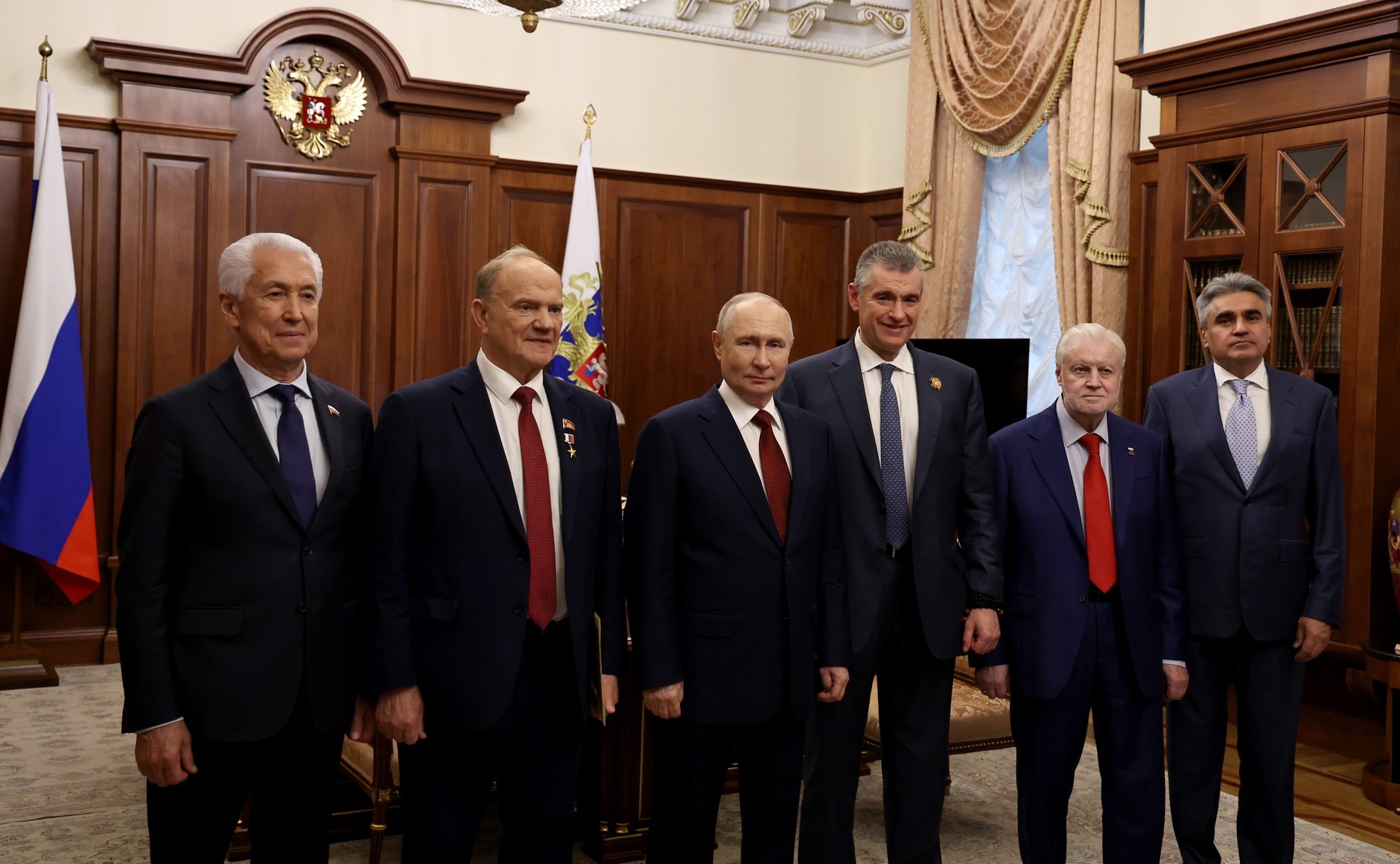
With 96.95% of precinct returns processed, United Russia is receiving 57.83% of the vote on the federal party list, the CPRF 13.76%, the LDPR 9.01%, New People 7.96%, and A Just Russia 5.00%. According to preliminary data, the other parties are not clearing the 5% threshold required to enter the State Duma. Turnout exceeded 59%, a sharp increase from 2021, when it stood at 51.72%.
Yet the ruling party’s result is not the only thing that matters in assessing political stability. The very structure of parliamentary representation is being preserved, and the rise in support for New People compared with 2021 has not, so far, been accompanied by the emergence of a new dominant force within the opposition camp. The results also show the limits of electoral statistics: they make it possible to map voting geography and shifts in party support fairly precisely, but not to establish the age, social, or occupational profile of each party’s voters.
The main preliminary conclusion is that there has been no sharp restructuring of the federal party balance. United Russia is retaining more than half the vote on the party lists, and its candidates are leading in more than 200 single-member districts, so it is already clear that even if some individual results are adjusted in the final count, the ruling party should preserve its qualified majority in the new Duma.
Higher turnout adds to the picture of political stability, although comparisons between the 2026 figure and previous cycles need to take into account the expansion of remote voting. According to the Central Election Commission, more than 4 million people were on the electronic voting rolls. Electronic voting lowers the costs of participation, but it still encompasses a broad yet specific group of voters who chose this method in advance and who use the internet, smartphones, and new technologies.
Reported violations were limited as well: according to Western assessments and some independent projects, around 900-1,000 complaints were filed, which on Russia’s scale could hardly have materially affected the overall outcome. Officially, the Central Election Commission has already invalidated 36,850 ballots at 20 polling stations in 12 Russian regions.
Even with the party balance unchanged, the new Duma’s membership will change significantly. This is especially clear in United Russia: in roughly 110 of the 198 single-member districts the party won in 2021, it fielded different candidates this time. The federal portion of its list was also refreshed: alongside Sergei Lavrov and Sergei Sobyanin, the top five included war correspondent Yevgeny Poddubny, Presidential Commissioner for Children’s Rights Maria Lvova-Belova, and Yunarmiya head Vladislav Golovin, a participant in the special military operation also known as the marine commander “Struna.” The party’s dominant position is thus being preserved alongside fairly extensive personnel rotation within its ranks.
Another part of this process has been the integration of participants and veterans of the special military operation into parliamentary politics. According to the Central Election Commission, the parties registered 186 such candidates for the State Duma, and they were not nominated only by United Russia, although it was United Russia that gave them the most visible representation. The elections therefore show two trends moving in different directions: the party system itself is changing very little, while the makeup of parliament is being renewed much more substantially.
The large-scale renewal of party lists and the candidate pool, however, did not produce an equally visible change in the campaign itself. According to the Central Election Commission, 21% of registered candidates were under 35, and the parties actively included participants in the special military operation, regional politicians, and candidates with public name recognition on their lists. Yet the preliminary results still point above all to the stability of the existing party balance.
The stability of the party configuration does not mean there are no problems with its further development. The campaign showed that parties have only a limited ability to turn personnel renewal into meaningful political content: the emergence of large numbers of new candidates was accompanied by relatively weak campaign personalization and low-intensity public political competition. Its next test will be whether it can renew forms of representation and political communication between federal election cycles, not simply whether it can preserve the current party balance.
The most noticeable change within the preserved party system involves New People. In the 2021 election, the party won 5.32% of the vote and 13 seats; now its result is approaching 8%, and in electronic voting it reached 15.42%. Over the five years, its electoral support has risen by about 2.6 percentage points. Yet the relationship among the main parties has not changed fundamentally: the CPRF remains in second place, the LDPR and New People are posting comparable results, and United Russia still holds a wide lead over the rest.
New People’s results deserve attention as a possible long-term development, especially given how young the party is: it was created in 2020. Even before the election, it stood out for the younger profile of both its support base and its candidates. According to VTsIOM’s Analytical Center, 67% of its supporters belonged to age groups under 45: 20% were ages 18-24, 24% were 25-34, and 23% were 35-44, while the average age of the candidates it nominated was 38. Its strong result in federal remote electronic voting also fits this party profile, although it still does not show which age groups produced the gain in votes.
The Central Election Commission’s currently available results, however, show how many votes each party received and how its support was distributed territorially, but they do not provide the electorate’s social or age structure. Precinct-level data answer, above all, where a party received more or fewer votes. Even a stable association between strong results and large cities, electronic voting, or areas with younger populations remains only an indirect indicator. A precise assessment of electoral change will therefore require detailed exit polls and subsequent representative studies. Those are what can show whether New People’s support increased among the younger audience already typical for the party, broadened into middle-age groups, or came from voters shifting away from other parliamentary parties. The same problem applies to the CPRF and the LDPR.
Even so, the preliminary results already provide a fairly clear picture at the institutional level. The election did not produce a new major political force or a sharp redistribution of support among the leading parties. Even New People’s growth is still taking place within the established system, not beyond it. Even if A Just Russia enters the State Duma or remains below 5%, the balance among the four largest forces will not change radically.
The more interesting question now is not simply that new deputies will appear, but whether they will acquire political weight of their own after the election. The campaign gave parties an opportunity to renew their representation, but the real significance of this rotation will become clear from the distribution of committee posts, intraparty roles, and the ability of new parliamentarians to advance initiatives of their own.
The campaign also exposed the weakness of some of the parties’ customary ways of working with voters. Televised debates and traditional campaigning occupied a visible place in the campaign’s formal structure, but played a much smaller role in the actual public discussion. Some experts see this as a sign that parties need to look for new ways of engaging voters in public. That, however, is more a question for the next electoral cycle than an independent conclusion to draw from the voting results.
The next federal electoral cycle will not come until 2031, so what happens next will depend not on a few tenths of a percentage point in the final returns from this vote, but on the parties’ ability to retain and expand the support they have won between elections. This is especially important for New People: its 2026 result shows an expanded electoral base, but whether that support is durable will become clear only from subsequent polling and regional campaigns. Likewise, for the CPRF and the LDPR, what will matter is not only the number of seats in the new Duma but also shifts in the composition of their supporters over the next several years.
For now, the election results confirm the high stability of the existing party system, even as change within it continues gradually through the redistribution of a few percentage points among the parliamentary parties, the renewal of their support base, and changes in their personnel.