

Nikol Pashinyan’s victory gave the government a workable parliamentary majority, but it did not eliminate either political polarization or the export sectors’ dependence on the Russian market. At the same time, Yerevan’s basic strategy for the near term is already clear: accelerate institutional rapprochement with the EU while retaining membership in the EAEU, a preferential price for Russian gas, and access to the Russian market.
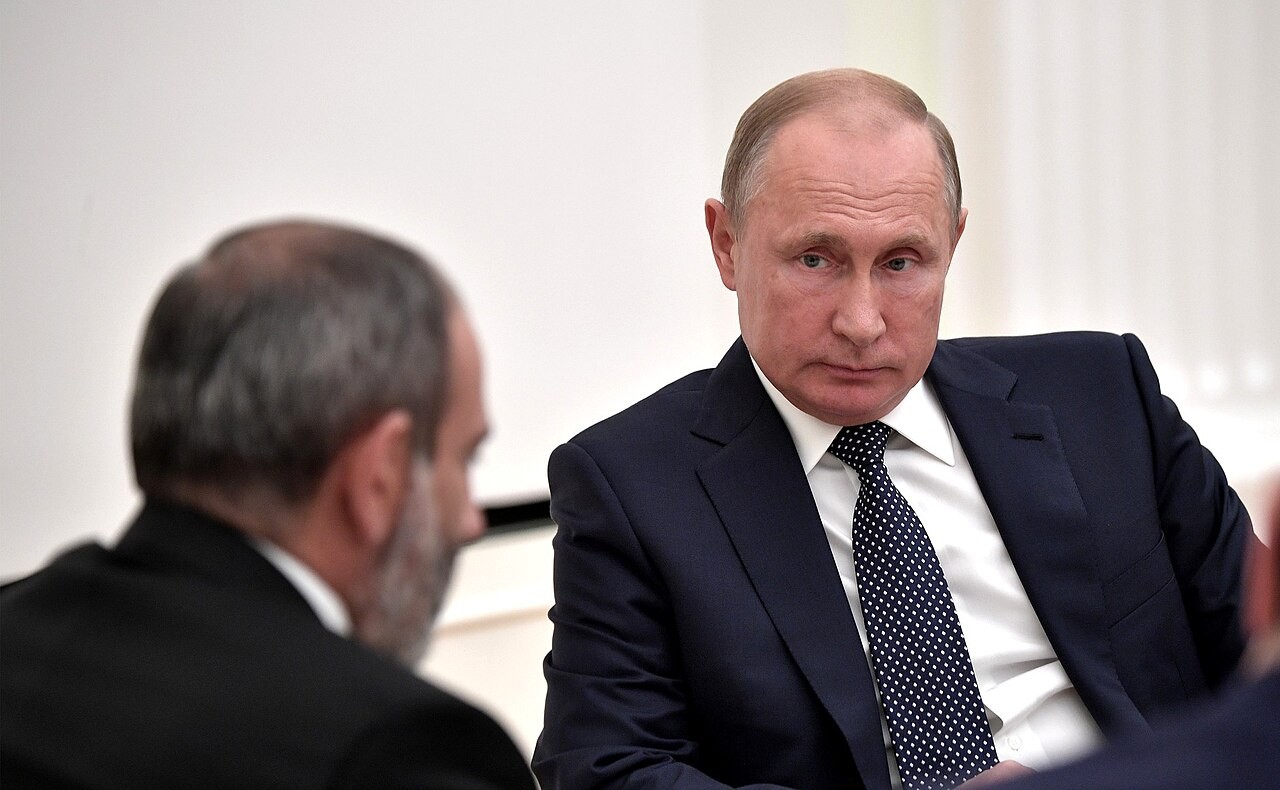
This approach was fully on display at the recent anniversary SCO summit in Bishkek, held to mark the organization’s 25th anniversary. Apparently seeking to emphasize his distinctiveness, Pashinyan, unlike the heads of other delegations from CIS countries, who used Russian in their remarks, spoke in Armenian.
How well the current Armenian leader can stay within the bounds of his chosen course and keep receiving the benefits of EAEU membership while moving toward EU membership will become clear by the end of this year and the beginning of next. On May 29, at the Eurasian Economic Union summit, the official joint statement of the presidents of Russia, Belarus, Kazakhstan, and Kyrgyzstan set out a demand that Armenia hold a referendum on choosing between accession to the European Union and retaining membership in the EAEU. No specific deadlines were given, but the December meeting of the Supreme Eurasian Economic Council will be the key moment when the heads of state discuss further joint steps depending on whether the referendum has been held.
As Russian Deputy Foreign Minister M. Galuzin notes: “It is obvious that if by then the call for a referendum has not been heeded, the leaders will take that fact into account in determining the appropriate further joint steps.” A report on the possible consequences of suspending the application of the EAEU treaty to Armenia will also be presented at the December meeting.
For now, since the end of May 2026, Russia has been gradually winding down imports of Armenian products. So far, Russia has now fully suspended imports across a broad range of Armenian goods: fresh vegetables, root crops, and greens; fruits and berries; dried fruits and dried vegetables; nuts; grains and processed grain products; cut flowers; live plants; timber and packaging; soil and substrates; dairy products; fish; major alcohol product lines; and Armenian mineral water.
For most of these categories, the Russian market would be extremely difficult to replace in the short term: geography and logistics are unforgiving. Armenian vegetables and fruit are not needed in neighboring Georgia, Iran, Azerbaijan, or Turkey. They have plenty of their own produce, which they export successfully, including to Russia.
As for the EU countries to which Pashinyan intends to redirect exports, the first shipments were far from encouraging.
According to Telegram channels, whose figures still require verification, Armenia sold just over 360 thousand euros’ worth of vegetables, fruit, and flowers to the EU in May and June of this year. That is roughly 80 times less than the revenue the country received in previous years when trade with Russia was active.
Attempts to urgently reroute the flow of products to the European market after Rosselkhoznadzor suspended imports of Armenian flowers, fruit, and vegetables were unsuccessful.
Exports of many categories of vegetables and fruit simply collapsed. These are perishable goods, and rerouting them to Europe simply did not work. Strawberries, for example, can be flown to the EU, but doing so would not be commercially viable — the price would rise too much, while Europeans have plenty of their own. Armenian farmers therefore threw away tons of berries and sold them on the domestic market for next to nothing.
Tomatoes also found no buyers: Armenia sold only €4 thousand worth of them in Europe in May–June 2026. Cucumbers, peppers, and greens posted near-zero figures. Spain, Morocco, and the Netherlands are well-known suppliers for European consumers, and they were not going to cede market share.
Armenian apricots are a brand. Unfortunately for farmers, they are recognizable only within the EAEU. In June Europe bought just 14 thousand euros’ worth of stone fruit.
The only thing that had even some relative success was flowers. In June Armenia managed to earn as much as 195 thousand euros from selling them. In May, 37 thousand. Yet in 2025 Russia bought more than 40 million dollars’ worth of Armenian flowers.
Even access to the Dutch flower exchange did not fix the situation. The ability to sell does not always lead to actual sales, especially amid intense price and quality competition from producers that have spent decades establishing themselves in the European market.
The harvest is simply rotting in storage, and the largest agricultural holdings have already cut tax payments to an already strained budget by half.
For now, however, these measures can still be viewed as an initial warning signal in bilateral relations. Stronger steps will apparently have to wait for the outcome of the summit-level meeting in St. Petersburg.
The key issue may be imports from Russia, which in 2025, according to data from Armenia’s Customs Service processed by Hetq, came to about $4.9 billion. That was 37% of all Armenian imports. The 48.5% decline relative to 2024 was largely explained by the disappearance of gold reexports.
According to the same data, Russia provided about $82 million in wheat supplies — 99% of Armenian imports of that product; about $40 million in vegetable oil — also 99%; and $189 million in petroleum products — approximately 37%. World Bank, using a different dataset and time period, puts Russia’s share in liquid fuels at nearly two-thirds. The discrepancy reflects changes in the structure of supplies and different time windows.
Russian Analytical Digest puts Russia’s share in imports of wheat, vegetable oil, and gasoline at 90-100%, and diesel, pork, and sugar at 48-56%.
As for possible alternatives to Russian supplies, model-based estimates suggest that switching to Ukrainian wheat and vegetable oil could raise costs by roughly 50%, while replacing Russian gasoline and diesel with Iranian supplies could increase costs by around 20–50%.
And this is only a scenario calculation based on customs prices, not a commercial offer from suppliers, and it does not include logistics costs.
In addition, according to the World Bank, Russia accounted for about 54% of net remittances in the first quarter of 2026. After 2022, Russian companies and specialists moved to Armenia: studies put the number of Russian IT specialists at around 10,000, and the additional contribution of ICT at up to 3% of GDP per year. These estimates show that a rupture would affect banking services, rents, IT, and domestic demand, not just foreign trade.
But the key lever that could create strategic problems for the current Armenian leadership is energy. It constrains Yerevan’s pace of reorientation more than the current dispute over food exports. Even a move from $165 to a hypothetical $275 per 1,000 cubic meters — one of the stress scenarios used by German Economic Team after the preferential discount is removed — would noticeably raise costs for industry and households, and any linkage to the higher European price would have an even greater effect.
Moscow understands this and keeps gas as a strategic lever, although a sharp price increase would at the same time accelerate the search for alternatives through Iran and strengthen anti-Russian consensus. Yerevan, for its part, understands perfectly well that an aggressive exit from the EAEU before new markets are created would turn political diversification into an immediate social shock.
So far, in June, the Armenian government introduced compensation for exports of greenhouse-grown produce, fruit, flowers, mineral water, wine, and brandy to new markets. Rates vary by product: from 150 drams per liter of mineral water to 830 drams per liter of brandy in terms of absolute alcohol. Reimbursement of customs duties is provided for deliveries to the EU, the United Kingdom, and Canada. On July 9, 3.14 billion drams — about 8.4 million dollars — were allocated to meet June obligations. The measure supports working capital and helps ship out perishable goods, but compared with the 637 million-dollar export exposure it amounts to only about 1.3%.
The European Commission proposed eliminating or reducing duties for two years on almost 80% of Armenian exports to the EU, including opening preferential access for nearly 99% of fresh fruit, vegetables, and plants and for more than 90% of beverages and spirits. In monetary terms, Armenian and European assistance together amount to around 68 million dollars, or about one-tenth of the upper export exposure or the macroeconomic stress scenario. The real share of direct compensation is lower, since not all of the European package consists of payments to specific producers, while tariff liberalization itself is a market opportunity rather than budget reimbursement.
The weak point of the European alternative is the starting base. In 2025, the EU imported only about 26 million euros’ worth of agri-food products from Armenia, whereas trade with Russia alone runs into hundreds of millions of dollars. European safety standards, the ability to trace a product’s entire route from producer to shelf, packaging requirements, and pesticide residue limits require investment and time. Perishable goods also depend on cold-chain logistics and contracts concluded in advance. Opening the borders with Turkey and Azerbaijan, implementing TRIPP (unlikely in the near term), and expanding trade with other EAEU countries could broaden routes, but they will not replace Russian demand in a single season. Compensation policy in 2026 will therefore most likely combine shipment subsidies, procurement interventions, and talks on a partial return to the Russian market.
Yerevan is making some effort to diversify energy supplies.
One of the main avenues is Iran. In July, during talks in Tehran, Iran’s oil minister and Armenia’s minister of territorial administration and infrastructures agreed to create a joint working group on energy and discussed new terms for exporting Iranian gas to Armenia. The discussion is not just about increasing supplies, but also about refinery construction, engineering projects, and expanded trade.
The most notable part of the talks was the discussion of prospects for the Iran – Armenia – Georgia – Russia energy corridor. Armenia and Iran already operate a “gas for electricity” program. They are now discussing prospects for linking several energy systems into a single axis, with Armenia becoming a transit hub between Iran and the northern route.
The idea is sound in principle, but there are three caveats:
The first is supply volumes. Iran’s main gas fields are located around the Persian Gulf, both onshore and offshore. Gas is also produced in the Caspian region, but it is not always enough to supply the north of the country, forcing Tehran to buy the missing volumes from Turkmenistan.
The second is the project’s construction timetable. The parties tie it to the building of the third Iran – Armenia power transmission line, which they have been unable to complete for 12 years.
The third, though it may prove decisive for Yerevan, is the EU’s reaction. How the Armenian authorities’ “Western partners” will respond to closer energy ties with Iran is a major question. Brussels is lobbying to include Armenia in a common energy corridor with Turkey. From Iran’s perspective, the endpoint of the project under discussion is Russia.
Yerevan is also considering Azerbaijan, until recently regarded as an adversary, as another avenue for solving its fuel problems. True, this mostly concerns refined petroleum products. According to Baku, Azerbaijan has begun supplies of gasoline and diesel fuel.
Gas is not under discussion. Azerbaijan is in no position whatsoever to replace Russia in this area. The main destinations for Azerbaijani gas exports are Turkey and EU countries. In 2025, Baku exported about 12.8 billion cubic meters to Europe, and the volume did not rise but fell. This despite the fact that Baku covers part of its domestic needs by buying Russian supplies.
Thus, at least in the medium term, imports of Russian gas will remain the only viable option.
This leaves Yerevan with a difficult political timetable.
It seems unlikely that Pashinyan will abandon his plans to turn the republic toward the West, first articulated during the March 2008 unrest in Yerevan. There is also reason to doubt that the Moscow meeting proposed by V. Putin with the Armenian prime minister, together with expert teams tasked with calculating point by point all the advantages Armenia now has and may lose in the foreseeable future, is likely to produce a substantive change in Yerevan’s position. The current Armenian leadership appears prepared to accept substantial economic costs in pursuit of its foreign-policy reorientation. Similar tensions between geopolitical choices and established economic ties have previously emerged in Moldova, Ukraine, and Georgia.
The question of holding a referendum remains open, since the authorities are not confident they would receive nationwide support for their course. An IRI preelection poll also showed a split society: 47% believed the country was moving in the right direction, 41% in the wrong direction. At the same time, 48% trusted no politician.
The restrictions imposed by Moscow on Armenian exports have obviously not made the republic’s leadership more popular. That is evident from the July protests by farmers in Ararat Province, who blocked the Yerevan – Yerask highway because they were unable to sell tomatoes, and from the protests by fish farmers outside the government building after the Russian market was closed. Processors of agricultural products, deprived of the ability to sell output that was largely export-oriented, also voiced their discontent.
These scattered protests have not really led anywhere, though they do create favorable conditions for the current government’s opponents. Whether they will be able to capitalize on the situation is another question. The Armenian opposition’s main problem remains unchanged: fragmentation.
To be fair, attempts to consolidate the government’s opponents are being made, but so far they have produced no real results. Samvel Karapetyan announced the creation of a coordination mechanism. And after the Constitutional Court rejected their complaints about violations during the parliamentary elections, five political forces said they would move toward more coordinated “institutional resistance.” Even so, Strong Armenia and the Armenia alliance retain different leadership groups, political biographies, and views on who should head the protest movement. Their decision to use their mandates increases the opposition’s organizational resilience, but reduces the likelihood of an immediate shift to a sustained street campaign.
So for now the government has a parliamentary majority and administrative resources, while its opponents have a substantial electoral base but still lack unified leadership.
Under these conditions, it is clear that in relations with his partners in the EAEU, at least for now, Pashinyan will maneuver and delay a decision on the referendum for as long as possible. At the same time, inside the republic the government is likely to tighten domestic political controls further, including pressure on opposition leaders and activists, while confrontation with the Armenian Apostolic Church may also intensify.
In our view, this is because if Pashinyan does decide to hold a referendum on joining the EU, conditions must first be created that reduce to a minimum the number of those prepared to vote against Yerevan’s plans. We therefore believe that if a referendum is held at all, it will be shortly before the December meeting of the Supreme Eurasian Economic Council, including as a way to delay decisions that could be dangerous for Yerevan.