
The upcoming state visit by To Lam, General Secretary of the Communist Party of Vietnam Central Committee and the country's president, to Russia on September 7-9, 2026 comes at an important moment for bilateral relations. The political foundation for developing relations between our countries has already been laid, and the two sides must now show whether they can turn it into long-term projects, resilient payment arrangements, and a significantly larger volume of trade.
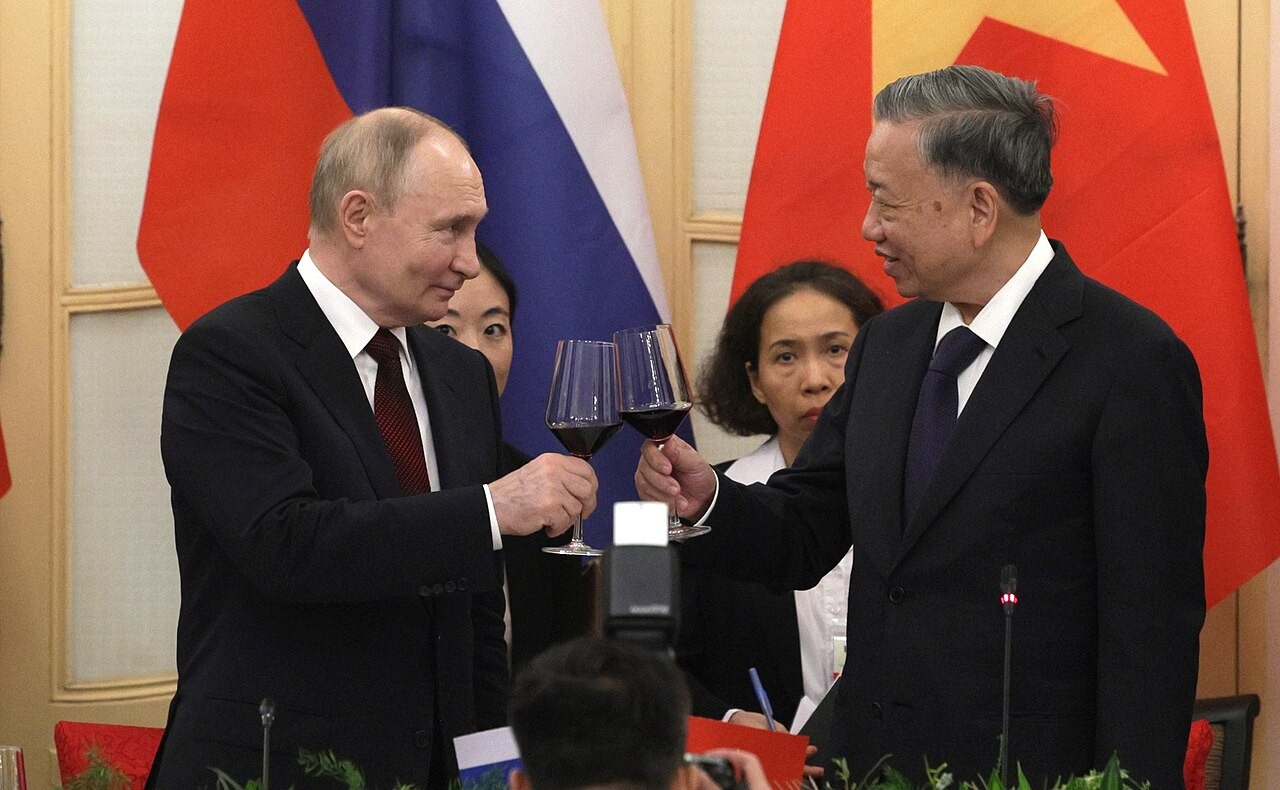
Hanoi has entered a new political cycle after the 14th Congress of the Communist Party of Vietnam and the formation of the 16th National Assembly. In January, To Lam was reelected general secretary, and in April the National Assembly elected him president of Vietnam. Holding the two top posts simultaneously gives the Moscow talks additional weight. The bilateral agenda, however, does not need to be built from scratch: the Comprehensive Plan for the Development of Cooperation through 2030 is in force, and the objectives of the comprehensive strategic partnership are set out in the joint statement of May 2025.
The significance of this political cycle lies above all in its development agenda. In the resolution of the 14th Congress, industrialization is linked to higher productivity and technology adoption, and international integration is seen as one way to accelerate that process. For Moscow, this creates a substantive agenda: Russian proposals will be most relevant where they help Vietnamese industry grow and become more technologically sophisticated.
Russia's accumulated experience of cooperation has practical value in this respect: in sectors where joint ventures already operate and specialists have been trained, a new entrant cannot instantly replicate relationships built up over time. Outside those sectors, each side still has to prove its advantage, and political trust will make it easier to discuss long-term commitments.
From Oil and Gas Experience to a Nuclear Power Plant
The most mature example of long-term cooperation already exists in oil and gas. Vietsovpetro operates in Vietnam and Rusvietpetro in Russia; cooperation has long gone beyond trade and includes joint production operations in both countries. In May 2025, the governments amended the agreements governing these joint ventures and agreed to expand exploration and production into new areas. That is valuable experience for new projects: the partners already have experience with long investment cycles, risk allocation, and joint asset management.
But the durability of the model does not in itself guarantee sustainable production. At Vietsovpetro's mature fields, production is declining naturally, and the company is offsetting that through enhanced oil recovery and exploration drilling. In June, Vietnamese Prime Minister Le Minh Hung supported Zarubezhneft in exploring opportunities to work on new offshore blocks, tying further progress to economic efficiency and compliance with national legislation.
Sustaining this cooperation requires distinguishing between the sustainability of the enterprise and the sustainability of its resource base. Governments can renew an agreement, and shareholders can reaffirm their willingness to work together, but that does not add recoverable reserves. Enhanced oil recovery prolongs the life of existing assets, while new blocks are expected to support the next wave of production. But gaining access to them must still be followed by exploration and field development before a commercial result can be achieved, and a positive geological result cannot be guaranteed in advance. Decisions on new investment are therefore needed before declining output begins to materially constrain funding for further development.
Ninh Thuan 1 will be a far bigger test. Russia and Vietnam signed an intergovernmental agreement on cooperation in the construction of the plant on March 23, 2026, and according to Rosatom, the project envisions two power units with VVER-1200 reactors and a total capacity of 2,400 MW. For now, the project remains in the preparatory stage: in June, the two countries' leaders were still discussing how to accelerate negotiations over the financial and contractual terms of construction.
Vietnam's return to nuclear power is itself tied to the broader task of supplying a growing economy with energy. In November 2024, the National Assembly approved the resumption of the project, linking that decision to the country's energy security. As industrialization advances, what matters is not only annual electricity generation, but also the ability to supply enterprises reliably around the clock, and Hanoi needs a nuclear plant as a source of baseload generation for further industrial growth. For an investor planning to operate a new manufacturing facility at high capacity for years to come, reliable energy supply is part of the basic economics of locating production, and in that logic the nuclear project serves a broader industrial purpose than simply increasing installed capacity.
A large nuclear power plant, however, requires corresponding development of the power system as a whole. Its output must be matched by demand and deliverable to consumers through the grid, planned outages of power units must be factored into supply planning, and the construction schedule must be aligned with the forecast for industrial demand.
For Russia, Ninh Thuan 1 is a project with a cooperation horizon measured in decades. Cooperation does not end with the construction of the power units: operating the plant will require fuel supplies, maintenance, engineering support, and the training of Vietnamese specialists. The project's importance for Moscow is therefore defined not only by a potential construction contract, but also by the long-term presence of Russian technology.
At this stage, that is even more important than another reaffirmation of political support for the project. The intergovernmental agreement has already been signed, and the technological basis has been defined, but before practical implementation can begin, the sides still have to agree on how construction will be financed and how responsibilities and obligations will be allocated. Until these issues are resolved, Ninh Thuan 1's political priority has yet to translate into a financially workable project structure, but it already illustrates the scope and long-term potential of cooperation between the two countries.
Trade Comes Down to Deal Terms
Trade remains one area where the existing foundation allows the two countries to set much more ambitious targets. According to Vietnamese customs data published by the government portal, merchandise trade reached $4.77 billion in 2025, up 4% from the previous year, and in June Vladimir Putin and Prime Minister Le Minh Hung agreed on a $15 billion target. The published report does not specify a specific deadline for reaching it. The target itself, however, signals a shared ambition to move from the gradual growth of existing supplies to a much larger scale of economic ties.
The structure of bilateral trade already points to a degree of complementarity between the two economies. According to the same Vietnamese customs data, Vietnam's exports to Russia fell slightly in 2025, while Russian exports to Vietnam increased. Coal and fertilizers, which are in demand in Vietnam, account for a notable share of Russian supplies. In the other direction, textiles, coffee, and seafood remain among the leading items. Bilateral trade thus already includes both production inputs and a wide range of consumer goods. The next stage may be tied to the emergence of new, stable trade flows, including those arising around joint manufacturing projects.
That is why the $15 billion target matters not only as a quantitative goal. Progress toward it can come from further growth in existing supplies, the entry of new producers into the market, and the emergence of new trade flows. Manufacturing cooperation can have a more lasting effect: operating enterprises create recurring demand for equipment, components, raw materials, and services, and with it more stable goods flows. The economic significance of joint production goes beyond customs statistics, since goods made in Vietnam for the local or regional market do not necessarily increase Russian-Vietnamese trade directly, but they do deepen the economic relationship itself.
An important institutional foundation for such growth already exists. The EAEU-Vietnam Free Trade Agreement has been in force since 2016 and gives companies tariff preferences. But practical access to the market depends on more than tariffs. It is telling that the Vietnamese side again raised the issue of lifting restrictions on a number of seafood-processing enterprises and expanding the list of approved suppliers, since increasing the number of companies that can actually use the benefits of free trade could give bilateral trade an additional boost without building new mechanisms from scratch.
Production Matters More Than Transit
Logistics options between Russia and Vietnam have become more diverse in recent years. FESCO operates shipping lines between Vladivostok and the ports of Ho Chi Minh City and Haiphong, and in July 2025, together with RATRACO, it launched a rail service from Vietnam to the Moscow region via China and Mongolia. For business, this means the ability to choose a route based on the nature of the cargo, delivery times, and the total transport cost, with sea transport remaining the natural option for a significant share of bulk cargo and the rail route being of interest where higher speed offsets the additional expense.
But the appearance of alternative routes does not in itself solve the problem of logistics costs, though it does create conditions for their further development. The regularity of departures, backhaul volumes in both directions, and the cost of delivery from a port or rail terminal to the final recipient all matter greatly, and the more stable bilateral goods flows are, the more opportunities carriers have to build dependable schedules and offer companies predictable terms. In this sense, trade growth and transport infrastructure development reinforce each other.
Restored direct air service adds to transport connectivity. In May 2025, Vietnam Airlines, after a break of many years, resumed regular flights between Hanoi and Moscow, and the two sides separately identified further expansion of regular and charter flights as one area of cooperation. With the tourist flow recovering quickly, stable air links become another element of bilateral infrastructure, simplifying business travel, contacts between companies, and the movement of specialists.
In this context, Hanoi's proposal to view Vietnam not only as a market for Russian goods is of interest. At the Eastern Economic Forum, Vietnamese Finance Minister Ngo Van Tuan proposed developing joint manufacturing projects and using the country as an economic bridge between Russia and ASEAN.
For Russian business, there are at least three different models here. The first is to supply products directly to the Vietnamese market. The second is to use the country's developed trade and transport infrastructure to work with other regional markets. The third assumes deeper involvement: locating part of production in Vietnam serving both the domestic market and customers across Southeast Asia. It is this last model that can create the most durable ties between enterprises in the two countries, since it implies investment, local suppliers, jobs, and a long-term presence for Russian business.
Access to regional trade preferences, however, depends on the actual substance of production in Vietnam. Rules of origin determine under what conditions goods are entitled to the relevant preferences, so this is not about simply reselling Russian goods through Vietnam, but choosing a production structure in which localization makes economic sense in its own right.
The ASEAN Trade in Goods Agreement, in turn, sets rules for industrial goods based on regional value content, change in tariff classification, and special rules for certain categories of goods. For potential Russian-Vietnamese enterprises, this means that access to regional trade preferences will depend on a real production contribution in Vietnam, not merely on shifting the final stage of assembly or sales to Vietnam. For Hanoi, such a model is attractive because it brings investment, jobs, and stronger domestic manufacturing capabilities, while for Russian companies, it offers a chance to gain a foothold closer to Southeast Asian markets and build more durable ties with local partners. The commercial logic of each such project, however, will still be determined by demand: Vietnam's geography and its participation in regional trade agreements do not by themselves make localization commercially viable.
The first concrete example of such a model has already emerged in the energy sector. In June, the Vietnamese prime minister proposed that Zarubezhneft, together with Petrovietnam and Vietsovpetro, explore joint production of wind power equipment and the creation of a supply chain. No investment decision has been made yet, but the choice of potential participants is itself telling: the accumulated oil and gas ties can be used as a basis for moving into adjacent segments of the energy sector.
If this initiative moves from discussion to a concrete project with identified customers, defined production volumes, and committed investment, it will become an example of a broader shift in Russian-Vietnamese economic relations: from stable cooperation in traditional sectors to the formation of new production chains.
Projects Require Specialists
Long-term projects will need their own pool of trained personnel. According to data cited by Dmitry Chernyshenko at a meeting of university rectors in May 2026, almost 3,000 Vietnamese students were studying at Russian educational institutions, and educational ties are much broader than the current student flow: Russian and Vietnamese universities and research organizations have concluded more than 500 cooperation agreements. The Russian side has also offered more than 1,000 scholarships to Vietnamese students.
This need is especially clear in nuclear power. In July, the Vietnamese government portal estimated that the nuclear program would require tens of thousands of specialists. About 3,900 people will be needed by 2030 for the direct operation of Ninh Thuan 1 and Ninh Thuan 2 alone, including about 670 university graduates who will have to receive training abroad. Additional specialists will also be required for state regulation, nuclear safety, technical support, research, and radioactive waste management. The workforce component of the nuclear program therefore has to develop in parallel with negotiations on construction, not begin after the plant is ready.
This creates a concrete area for further Russian-Vietnamese cooperation. If Ninh Thuan 1 moves into practical implementation, existing links between universities can be tied more closely to the requirements of the future plant operator, engineering organizations, and regulatory bodies. For a project with a life cycle measured in decades, training Vietnam's own specialists becomes part of its sustainability, while for Russia, educational cooperation complements its technological presence and creates a professional environment capable of working with Russian equipment after construction is complete.
The two countries also have experience of long-standing scientific cooperation. The Russia-Vietnam Tropical Center has been operating for decades, and its 2025–2029 program of scientific research and applied work includes research in materials science and medicine. Educational and scientific interaction is complemented by broader humanitarian ties. In joint Russian-Vietnamese documents, the sides agreed to continue holding Culture Days, expand the study of Russian in Vietnam and Vietnamese in Russia, support contacts between public organizations, and expand exchanges between the citizens of the two countries. These ties also rest on a substantial social base: about 80,000 Vietnamese citizens live, study, and work in Russia.
Tourism offers a very different example. From January to August 2026, Vietnam recorded more than one million arrivals by Russian tourists, and Russia ranked third in the number of tourist arrivals in Vietnam after China and the Republic of Korea. At the same time, according to Tuổi Trẻ, as of mid-June Vietnam had 462 Russian-speaking guides, and a significant share were specialists who had previously studied or worked in the USSR and Russia, while demand was growing faster than new guides could be trained. The tasks of industrial cooperation are, of course, entirely different, but this example shows something more general: the human capital created by the relationship over previous decades is still at work, yet relying on it alone is no longer enough.
Vietnam in the Asian Strategy of Russian Business
The results of To Lam's upcoming visit are unlikely to be measured solely by the number of documents signed. In the case of Ninh Thuan 1, a substantive result would be progress on the financial and contractual arrangements that would allow the project to move to practical preparation. In oil and gas, the result could be a shift from discussing new blocks to concrete projects and contracts that would support the resource base of cooperation. In trade, what matters are decisions that make market access, payments, and regular deliveries easier for companies. In industrial cooperation, finally, projects with identifiable investors, customers, and markets would signal a new stage in cooperation.
The significance of the current stage goes beyond individual Russian-Vietnamese projects. For Russian business, a broader question arises: what role can Vietnam play in Russian business engagement with Asia? Russian business engagement in Asia is understandably focused heavily on China: its market, industrial base, and role in Russia's foreign trade are incomparably larger. But that concentration can obscure countries that offer a different set of opportunities, and Vietnam deserves to be assessed on its own terms.
The scale of its economy already makes it more than a niche market. Vietnam's population in 2025 reached 102.3 million, the economy grew by 8%, and the World Bank expects growth to remain strong at around 6.8% in 2026. Disbursed foreign direct investment in 2025 reached $27.6 billion. Growth is supported by exports, industry, investment, and the development of domestic demand, while one of the central questions of further economic policy is increasing the share of value added retained within the country and deepening ties between foreign and local enterprises.
For potential Russian investors, this is an important consideration. Vietnam is interested not only in importing finished products, but also in production, technology, the training of specialists, and deeper integration of foreign companies into domestic industry. That is why the joint-venture model, traditionally associated in Russian-Vietnamese relations primarily with the oil and gas sector, may find broader application.
Another advantage comes from the country's high integration into international trade. The World Bank estimates Vietnam's trade-to-GDP ratio at about 170%, making it one of the most open economies in the world. At the same time, the country participates in a broad network of regional groupings and trade agreements - from ASEAN and RCEP to CPTPP, agreements with the EU and the United Kingdom, and the free trade agreement with the EAEU. As already noted, the existence of these agreements does not in itself guarantee companies preferences, much less turn Vietnam into an automatic channel to third markets, but where there is real production and compliance with rules of origin and trade rules, companies can substantially broaden the geographic reach of their business.
Russian companies, however, have an advantage they do not have in many other fast-growing Asian markets: they do not have to start from a blank slate. Vietsovpetro and Rusvietpetro have established a track record of joint production, nuclear cooperation is advancing, the EAEU-Vietnam agreement is in force, educational and scientific ties are active, direct transport routes exist, and specialized banking infrastructure is already in place. There is already a foundation on which projects can be built beyond the traditional sectors - above all where Russian offerings combine equipment, engineering expertise, services, and the possibility of localization.
That is why Vietnam is of interest to Russian business not as an alternative to China, but as an independent direction for diversifying work in Asia. For some companies, it will remain a growing sales market; for others, it may become a manufacturing base serving regional customers; for still others, it may become a partner in long-term energy and infrastructure projects. Which model makes sense depends on the sector, demand, and the economics of the specific project, but the range of possibilities is already much broader than the traditional view of Russian-Vietnamese trade.