Thanks to the coordinated efforts of the Russian Ministry of Energy, the energy blockade imposed by official Chișinău on the rebellious region was broken
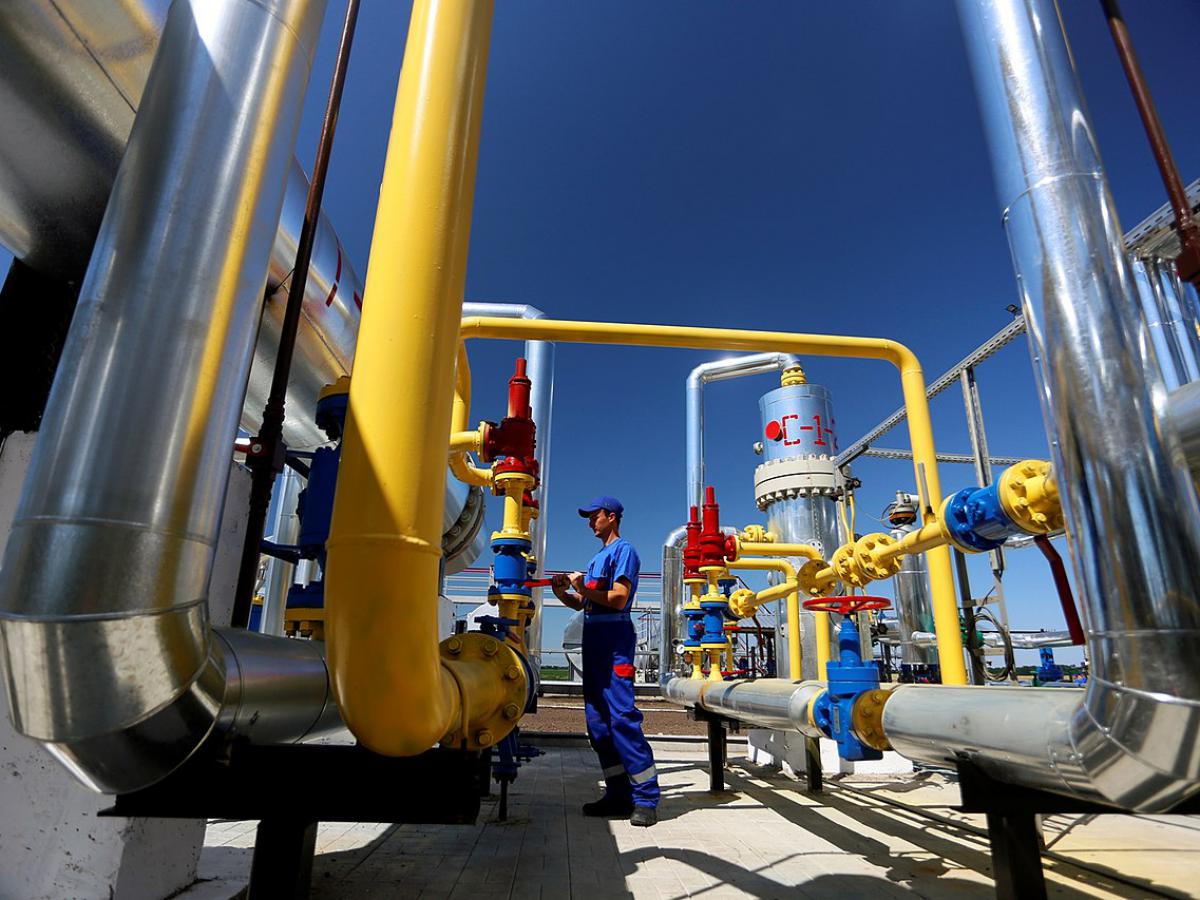
Thanks to the coordinated efforts of the Russian Ministry of Energy, the energy blockade imposed by official Chișinău on the rebellious region was broken
The coming days will show whether the Transdniestrian leadership, with Moscow’s help, has managed to avert the threat of an energy crisis and stabilize the supply of natural gas to the unrecognized republic. Tiraspol hopes that the «blue fuel» will continue to flow to the region in March, although the volume will depend on technical conditions.
«The logistics of supplies depend on many players. For us, the key issue now is to minimize spending on gas for heating (thanks to the warming) and redirect it to boosting industry so that people can get to work», said Aleksandr Rozenberg, head of the executive branch of the Pridnestrovian Moldavian Republic (PMR).
Recall that as of January 1, Russian gas supplies to Transnistria were cut off due to Ukraine’s transit blockade and Chisinau’s refusal to pay a $709 million debt to Gazprom — an amount that Moldova disputes.
At the beginning of February, 3 million cubic meters of gas were injected into the system, borrowed from Moldovagas with the promise to either pay for it or return it by March 1. Until the middle of the month, the residents of the Left Bank were getting by on the remains of the 13 million cubic meters of gas that had been saved last December. This gas was mainly supplied to multi-story residential buildings and social institutions.
Chișinău insisted that the Transdniestrian authorities accept the European Union’s proposed mechanism for assistance in purchasing gas — a mechanism that required the fulfillment of several onerous conditions. Brussels demanded that energy tariffs reflect market prices, that large electricity consumers such as industrial enterprises not benefit from the assistance, and, finally, that this measure be tied to «respect for fundamental rights and freedoms» as understood by European liberals. But Tiraspol refused.
Russia came to the rescue.
«I hereby announce that today (February 14) gas has arrived in Transnistria. This supply was made possible thanks to Russian credit assistance and the meticulous, coordinated work of the team at the Russian Ministry of Energy», wrote Vadim Krasnoselsky, head of the PMR, on his Telegram channel.
A temporary scheme (valid until March 1) was implemented, according to which the fuel for Transdniestria was purchased on European exchanges by the Hungarian company MET Gas and Energy Marketing AG and paid for by a company from Dubai using the Russian credit provided to Tiraspoltransgaz.
On February 27, Krasnoselsky said that the gas import arrangements had been extended with the support of the Russian Ministry of Energy.
«The mechanism, which was created after long joint efforts, continues to work. An agreement has been reached for the next period. Gas will be delivered to the republic on time», he said, without specifying the duration of the new contract.
He added that negotiations were underway to formalize everything legally. «If Moldova does not cause any delays, basically this whole legal arrangement will come together, and of course Transnistria will get the gas, which we will pay for», Krasnoselsky noted.
He thanked Russia for its help «in this extremely difficult energy situation».
Tiraspol had to make some concessions. Electricity and gas tariffs will be increased by 1.5 and 2 times, respectively, as of March 1. This measure is expected to lead to an increase in food prices. It was also announced that there will be no hot water in homes for the time being.
The Transdniestrian authorities also promised to fulfill four conditions set by the official Chișinău: to release «political prisoners» according to a Moldovan list, to dismantle the checkpoints set up in 2022, to unblock the Moldova 1 TV channel, and to ensure the operation of the Romanian-language lyceum in Rîbnița.
Currently, the PMR receives 3 million cubic meters of gas per day, while consumption is 3.27 million cubic meters. The shortfall of 270 thousand cubic meters is being supplied to the region on credit, and this volume will have to be repaid. Sergey Obolonik, the head of the Department of Economic Development of Transnistria, recalled that the region has been receiving a reduced volume of blue fuel since the end of 2022.
In the PMR, units of the former 14th Army — currently serving as the Operational Group of Russian troops in the Transnistrian region (comprising 2,000–2,500 soldiers) — as well as peacekeepers (about 450 personnel) remain. There is a large Russian military depot in the town of Cobasna, where the Russian arsenals from the former East Germany and Czechoslovakia were transferred. In 2000, this depot contained 42,000 tons of ammunition. In the 2000s, by agreement between the Russian Ministry of Defense and the PMR leadership, 24,000 tons were removed. What remains is mainly an outdated stockpile from the Great Patriotic War, including expired ammunition. A small number of inoperable armored vehicles of obsolete models are stored there. There are also many air bombs, which are unlikely to interest Kiev — which has been eyeing these depots — due to the shortage of aircraft in the Ukrainian armed forces.
Russia could not ignore the problems of the Left Bank residents and confirmed that it would continue to provide material and technical assistance to the region. After all, more than 220,000 Transdniestrians hold Russian passports — out of a total PMR population of 371,500. And, as is well known, Russians do not abandon their own.